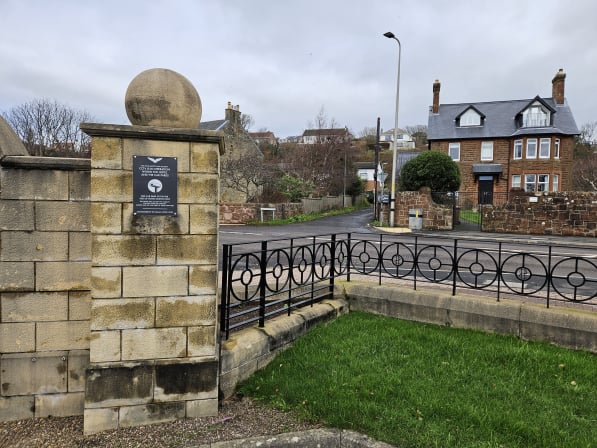
 photo I J Dickson
Waypoint 7 Seamill (Hydro entrance)
What3Words ///affair.middle.musically
Seamill Hydro opened in 1871 as a hydropathic spa, but today offers a wide range of health and refreshment opportunities.
Waypoints: WP7 Seamill, WP6 Ardrossan Marina, WP5 Saltcoats harbour
Distance: X m, Y km; Time: Z hrs;
Terrain: tbd
Public transport: tbd
Toilets: tbd
Cafes: tbd
Download pdf of this section - in preparation
>> next section (A southwards)
photo I J Dickson
Waypoint 7 Seamill (Hydro entrance)
What3Words ///affair.middle.musically
Seamill Hydro opened in 1871 as a hydropathic spa, but today offers a wide range of health and refreshment opportunities.
 In 'The Ayrshire Legatees', Miss Rachel Pringle writes to Miss Isabella Todd)
"The blast came dark from the waters, and the clouds lay piled in every form of grandeur on the lofty peaks of Arran. The road . . lies along the shore. The landward view is limited to the foot of a range of abrupt mean hills, and on the other side it meets the sea: as we were obliged to keep the glasses up, our drive for several miles was objectless and dreary." (Chapter 1, letter 2)
At the bus stop on the seaward side just south of Seamill Hydro, at the bridge over the Kilbride Burn, look over the wall to your left to the mill that gives Seamill its name - still with its millwheel. Heritage Highlight: the Seamill Mill.
From here, either follow the asphalt path alongside the A78 or wander along the shore until it proves necessary to join the roadside path for a short distance.
At the caravan park and pub, take the path out round South Inch point. Offshore lies Horse Island, providing shelter to the bay and with, at its south end, a landmark beacon erected by the Earl of Eglinton in 1811; the island is now a seabird nature reserve.
Several car parks along the route offer picnic stops (but sadly not for motorhome travellers in summer months).
On reaching Ardrossan, follow the wide promenade round to the Marina, where once there was an oil terminal and a shipyard.
No. 72 takes you
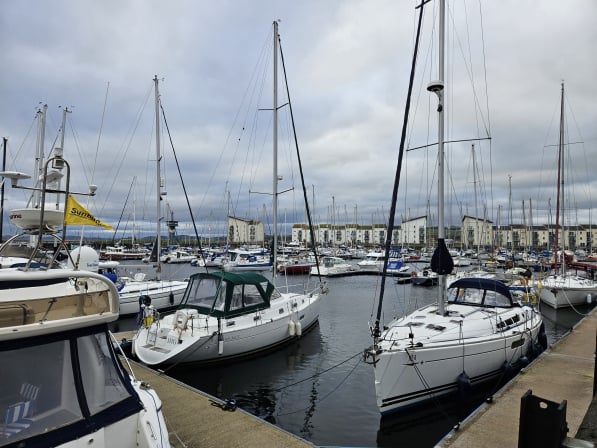
Waypoint 6 Ardrossan Marina
What3Words ///buns.cross.souk
photo I J Dickson
In 'The Ayrshire Legatees', Miss Rachel Pringle writes to Miss Isabella Todd)
"The weather was cold, bleak, and boisterous, and the waves came rolling in majestic fury towards the shore when we arrived at the Tontine Inn of Ardrossan. What a monument has the late Earl of Eglinton left there of his public spirit! It should embalm his memory in the hearts of future ages, as I doubt not but in time Ardrossan will become a grand emporium; but the people of Saltcoats - a sordid race - complain that it will be their ruin, and the Paisley subscribers to his lordship's canal grow pale when they think of profit." (Chapter 1, letter 2)
Hugh Montgomerie (d. 1819), the 12th Earl of Eglinton, laid the foundation stone for Ardrossan Harbour in 1806 with the vision of creating a major port connected to Glasgow and Paisley by canal; only 11 miles of canal was built before funds ran out and investment ceased.
Galt's Tontine Hotel is undoubtedly the 18-bedroom Eglinton Arms Hotel, built in 1806-07 as a guest residence for the 12th Earl, described in 1820 as "unquestionably, the most superb of any [hotel], out of a great town, in Scotland", empty by the time of a fire in 2000, since demolished and replaced by new housing on Princes Street.
Continue on to Ardrossan Cross (Princes Street). You may wish to take Bute Place on your left and make for Castle Hill (up a zig-zag path; steps will take you down the other direction). Probably built in the 13th century, its history includes occupation by the English, recapture by Sir William Wallace, and removal of stones by Cromwell to build his Citadel at Ayr.
Then follow the path round South Bay to Saltcoats harbour.
No. 72 takes you
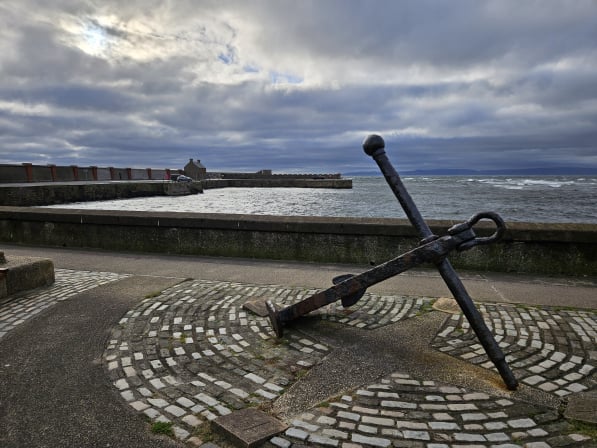
Waypoint 5 Saltcoats harbour
What3Words ///wharfs.quicksand.just
Saltcoats, once a small fishing village, is named from the cottages of folk who evaporated salt from seawater for the curing of fish - "salt-cots". When coal was found locally, the harbour was built in 1684 for its export; in 1772 a two-mile canal was dug to bring coal to the harbour. In 1812, on land reclaimed from the sea, a horse-drawn railway was built. The harbour could handle up to 24 vessels (of 20 to 200 tons) exporting coal, salt and textiles, and importing fish and grain. The seaward extension was added in 1847. Just north of the harbour are three sea-water bathing pools, no longer popular!
photo I J Dickson

Email: info@johngaltway.org
Museum: Wellwood Burns Centre, 28 Eglinton Street, Irvine, KA12 8AS
© Irvine Burns Club
 Seamill to Ardrossan Marina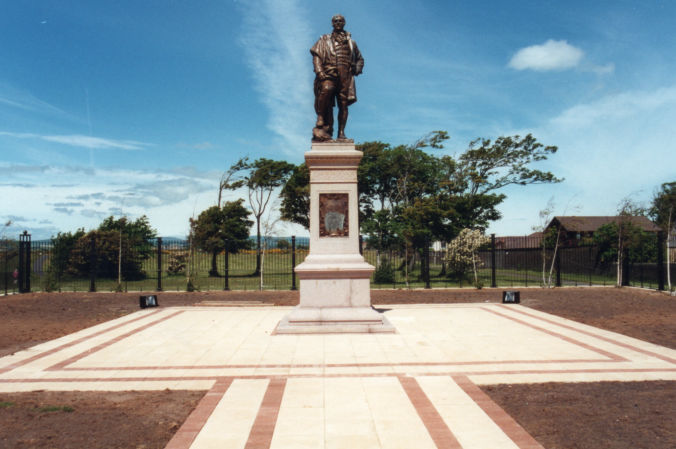
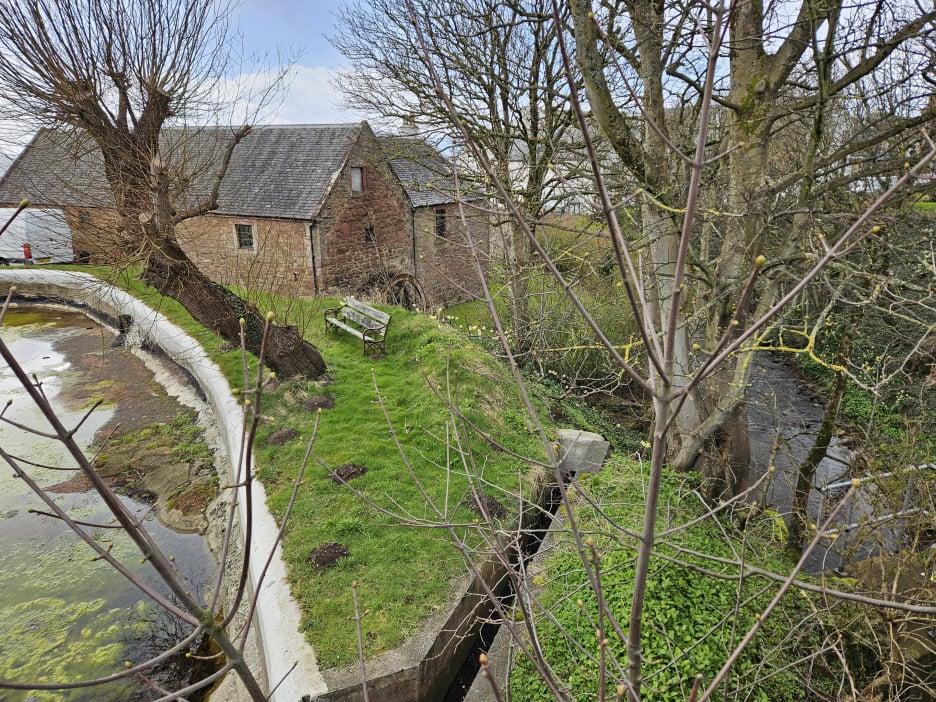 photo I J Dickson